
Manual Gearbox Stuck in Gear: A Comprehensive Guide
Navigating a stuck manual gearbox can be frustrating; this guide details common causes, troubleshooting, repair options, and preventative measures for a smooth drive.
While manuals decline in popularity, understanding their mechanics is crucial for owners facing this issue, especially considering past model recalls.
Automatic transmissions are complex, but manual issues often stem from simpler, more accessible components, making diagnosis and repair potentially manageable.
Understanding the Problem
A stuck gear in a manual transmission presents as an inability to shift into, or out of, a specific gear, or difficulty moving the gear lever at all. This isn’t merely inconvenient; it’s a safety concern, potentially leaving you stranded or causing loss of control.
The core issue lies within the gearbox’s intricate system of gears, synchronizers, and shift mechanisms. These components must work in perfect harmony for smooth operation. When a gear becomes ‘stuck’, it indicates a disruption to this harmony.
Modern vehicles, increasingly favoring automatics, often leave owners unfamiliar with manual transmission intricacies. However, recognizing the problem’s severity and seeking timely diagnosis is vital. Ignoring it can lead to further, more expensive damage. Past recalls, like the 2017 issue, highlight potential systemic weaknesses in certain models.
Common Causes of a Stuck Gear
Several factors can contribute to a manual gearbox becoming stuck. The most frequent culprit is often related to the clutch system, but issues extend beyond this. Worn synchronizers, crucial for smooth gear engagement, can fail, causing gears to bind. Damaged gear teeth themselves, though less common, create significant resistance.
Problems with the shift linkage – the connection between the lever and the gearbox – can also prevent proper gear selection. Low transmission fluid levels hinder lubrication, increasing friction. Even a faulty clutch cable (in cable-operated systems) can disrupt the disengagement process.
Considering the decline of manuals, fewer mechanics specialize in their repair, potentially leading to misdiagnosis. Recalls, such as the 2017 instance, suggest certain models are predisposed to specific gearbox issues, demanding careful investigation.
Clutch Issues: The Primary Suspect
The clutch is often the first area to investigate when a manual gearbox refuses to cooperate. Its primary function – disengaging the engine from the transmission – is vital for smooth shifting. A worn clutch disc loses its friction material, preventing complete disengagement, leading to gears feeling stuck.
Hydraulic clutch systems are susceptible to failure; low fluid levels or a faulty master/slave cylinder can compromise pressure, hindering clutch operation. Even air in the hydraulic lines can cause incomplete disengagement. Proper diagnosis requires checking for leaks and testing pedal feel.
Remembering that manuals are becoming rarer, specialized knowledge is key. A failing clutch often presents with slipping or difficulty engaging gears before a complete lockup occurs.
Worn Clutch Disc
A worn clutch disc is a frequent culprit when a manual gearbox becomes stubbornly stuck. Over time, the friction material on the disc diminishes due to constant engagement and disengagement with the flywheel. This reduced friction prevents the engine from fully separating from the transmission, making gear selection difficult or impossible.
Symptoms include a gradual increase in pedal effort, slipping during acceleration, and a burning smell. As the disc wears thinner, it struggles to create sufficient grip, leading to the sensation of gears being locked.
Inspection requires removing the transmission, a task best left to experienced mechanics. Measuring the disc’s thickness against manufacturer specifications confirms wear. Replacement is often necessary to restore proper gearbox function.
Hydraulic Clutch System Failure
For vehicles utilizing a hydraulic clutch system, malfunctions can directly cause a stuck gearbox. This system relies on hydraulic pressure to actuate the clutch fork, disengaging the engine from the transmission. A leak in the system – whether in the master cylinder, slave cylinder, or connecting lines – reduces pressure, hindering full clutch disengagement.
Symptoms include a spongy or soft pedal feel, difficulty shifting, and the gearbox remaining stuck even with the pedal fully depressed. Air in the lines can also create similar issues, diminishing hydraulic efficiency.
Diagnosis involves inspecting for leaks and bleeding the system to remove air. Component replacement – master or slave cylinder – may be required to restore proper hydraulic function and free the stuck gearbox.
Shift Linkage Problems
The shift linkage is the mechanical connection between the gear selector in the cabin and the transmission itself. Issues within this system can prevent the gearbox from fully engaging or disengaging gears, resulting in a stuck situation. Problems can range from simple looseness to significant damage.
A compromised shift linkage might exhibit imprecise shifting, excessive play in the gear lever, or a complete inability to move the gear selector. These issues can stem from worn bushings, corroded joints, or even bent components.
Proper function of the linkage is vital for accurate gear selection. Inspection and adjustment, or replacement of worn parts, are often necessary to resolve a stuck gearbox caused by linkage problems.
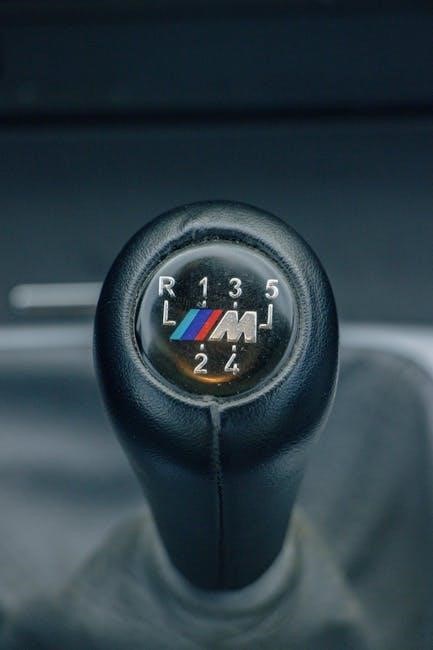
Bent or Damaged Shift Linkage
A bent or damaged shift linkage directly impedes the transmission’s ability to select gears correctly. Physical damage, often from impacts or corrosion, can misalign the connection between the gear selector and the gearbox. This misalignment prevents the shift forks inside the transmission from fully engaging or disengaging the gears.
Visual inspection is crucial; look for obvious bends, cracks, or signs of stress on the linkage rods and joints. Even slight deformations can cause significant shifting problems, leading to a stuck gear. Rust and corrosion weaken the metal, making it more susceptible to bending or breaking;
Repair typically involves replacing the damaged linkage components. Attempting to bend a damaged rod back into shape is generally not recommended, as it can further weaken the metal and create new problems.
Loose Shift Linkage Connections
Loose connections within the shift linkage are a frequent cause of difficulty selecting gears, potentially leading to a stuck gear situation. Over time, the bolts and bushings that secure the linkage components can loosen due to vibration and normal wear. This slack in the system prevents precise gear selection.
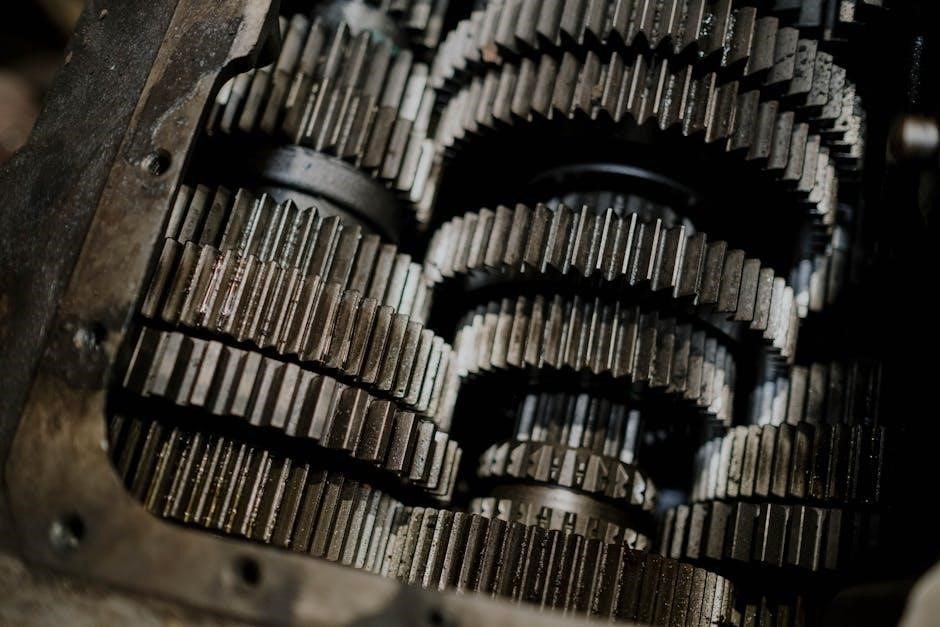
Carefully inspect all connection points along the shift linkage, from the gear selector in the cabin to the transmission itself. Check for worn or missing bushings, loose bolts, and any play in the joints. Even a small amount of looseness can disrupt the mechanical connection.
Tightening the bolts is often the first step in addressing this issue. Replacing worn bushings is also crucial for restoring proper linkage function and preventing future problems. A properly secured linkage ensures accurate gear engagement.
Internal Gearbox Damage
Significant internal damage within the manual gearbox represents a more serious cause of a stuck gear. Worn or broken synchronizers, essential for smooth gear changes, can prevent proper engagement, locking gears together. Damaged gear teeth, resulting from wear, impact, or lack of lubrication, create friction and resistance, hindering movement.
Diagnosing internal damage typically requires a professional inspection, often involving gearbox disassembly. Symptoms include grinding noises during shifting, difficulty engaging specific gears, and a persistent feeling of being stuck. Ignoring these signs can lead to catastrophic failure.
Repairing internal damage is often costly, potentially exceeding the value of the vehicle. Gearbox replacement may be the most practical solution in severe cases, demanding careful consideration of costs and benefits.
Worn or Broken Synchronizers
Synchronizers are critical components within a manual gearbox, responsible for matching the speeds of the gears before engagement. Over time, these components experience wear due to constant friction during shifting. Worn synchronizers struggle to equalize speeds, leading to grinding noises and difficulty selecting gears, ultimately causing a stuck gear situation.
Broken synchronizers represent a more severe issue, completely preventing gear engagement. Symptoms include a pronounced grinding sound, especially when shifting quickly, and an inability to reliably enter certain gears. Diagnosis often requires gearbox disassembly for visual inspection.
Repair involves replacing the worn or broken synchronizers, a task best left to experienced mechanics. Ignoring this issue can lead to further damage to the gearbox.
Damaged Gear Teeth
Damaged gear teeth represent a significant problem within a manual transmission, often resulting in a gear becoming locked or extremely difficult to shift. This damage can occur due to several factors, including aggressive shifting, lack of lubrication, or the presence of foreign objects within the gearbox.
Symptoms include loud grinding or clicking noises during gear engagement, difficulty selecting specific gears, and a feeling of resistance when attempting to shift. Severe damage can even cause teeth to break off entirely, leading to complete gearbox failure.
Diagnosis typically involves a thorough inspection of the gearbox internals. Repair often necessitates replacing the damaged gears, a complex and costly procedure. Preventative maintenance, such as regular fluid changes, is crucial to minimize the risk of gear tooth damage.
Low Transmission Fluid Levels
Insufficient transmission fluid is a surprisingly common cause of a stuck gear in a manual gearbox. Fluid levels directly impact the lubrication and smooth operation of internal components, including gears and synchronizers. Low fluid increases friction, making gear engagement difficult and potentially locking gears in place.
Symptoms include difficulty shifting, especially into certain gears, whining or grinding noises, and a general feeling of resistance when attempting to change gears. Ignoring this issue can lead to accelerated wear and tear on gearbox components.
Checking the fluid level is a relatively simple DIY task, usually involving a dipstick. Top up with the correct type of transmission fluid as specified in your vehicle’s manual. Regular checks and fluid changes are vital preventative measures.
Clutch Cable Issues (For Cable-Operated Clutches)
Vehicles utilizing a cable-operated clutch system can experience issues where the cable itself becomes the culprit behind a stuck gear. A stretched, frayed, or seized cable prevents full clutch disengagement, making gear changes difficult or impossible. This incomplete disengagement effectively keeps the gearbox partially engaged, locking gears.
Symptoms include a stiff or unresponsive clutch pedal, difficulty getting into gear (particularly first or reverse), and a feeling that the clutch isn’t fully depressing. Visual inspection of the cable for damage is crucial.
Adjustment of the cable may resolve minor issues, but replacement is often necessary for severely damaged cables. Proper cable lubrication during installation is essential for smooth operation and longevity.

Troubleshooting Steps
When faced with a stuck gear, a systematic approach to troubleshooting is vital. Begin with initial checks, attempting to gently rock the vehicle while simultaneously trying to move the gear lever. Avoid forceful manipulation which could cause further damage.
Next, thoroughly test the clutch pedal for proper travel and feel. Inspect the shift linkage for any obvious bends, looseness, or disconnections. Checking the transmission fluid level and condition is also crucial; low or contaminated fluid can hinder gear operation.
Document your findings at each step. If initial assessments yield no clear cause, more in-depth diagnostics may be required, potentially involving a professional mechanic.
Initial Checks: Easy DIY Assessments
Before diving into complex repairs, perform several simple checks. First, try gently rocking the vehicle back and forth while attempting to shift gears. This can sometimes dislodge a slightly stuck mechanism. Visually inspect the gear shift lever for any obstructions or damage.
Next, with the engine off, attempt to move the gear lever through all positions. Note any resistance or unusual sounds. Check for any loose connections around the shift linkage under the vehicle, if accessible. These initial assessments require no special tools and can quickly identify obvious issues.
Remember to prioritize safety and avoid forcing anything.
Testing the Clutch Pedal
A properly functioning clutch is vital for smooth gear changes. Begin by checking the clutch pedal’s travel; it should move freely and return fully. Note any stiffness, sponginess, or resistance during operation. With the engine running, press the clutch pedal to the floor and attempt to shift gears.
If the gear still resists movement, the clutch may not be fully disengaging. Listen for unusual noises when pressing the clutch, which could indicate hydraulic issues. Inspect the clutch master and slave cylinders for leaks, if accessible. A failing clutch is often the primary suspect when a manual gearbox becomes stuck.
Proper clutch function is essential for successful gear engagement.
Inspecting the Shift Linkage
The shift linkage connects the gear lever to the transmission, and any disruption here can cause difficulty selecting gears. Begin by visually inspecting the linkage for bent or damaged components. Check all connection points – bushings, rods, and levers – for looseness or excessive play.
Attempt to move the linkage by hand; any binding or resistance indicates a problem. Ensure all clips and fasteners are secure, as loose connections can prevent full engagement. A compromised shift linkage can physically obstruct gear selection, leading to a stuck gear.
Carefully examine the linkage’s range of motion to confirm it’s operating smoothly and without obstruction.
Checking Transmission Fluid Level & Condition
Low transmission fluid can significantly hinder gear operation, potentially causing a stuck gear. Locate the transmission fluid fill plug (consult your vehicle’s manual). With the engine warm, carefully remove the plug and check the fluid level – it should be at the fill hole.
More importantly, assess the fluid’s condition. Healthy fluid is typically amber or light brown and has a slightly sweet smell. Dark, murky fluid with a burnt odor indicates contamination or degradation, suggesting internal wear.
Insufficient or degraded fluid reduces lubrication, increasing friction and making gear selection difficult. Replenishing or flushing the fluid may resolve the issue, but underlying damage may require further attention.
Repair Options & Costs
Repair costs for a stuck manual gearbox vary widely depending on the cause and extent of damage. Simple fixes, like replacing a worn clutch cable or adjusting shift linkage, might cost between $100 and $300 in parts and labor.
More complex issues, such as synchronizer replacement or gearbox rebuilds, can range from $500 to $1500 or more. If a recall applies to your vehicle’s model year (like the 2017 recall mentioned), the repair might be covered by the manufacturer.
A complete gearbox replacement is the most expensive option, potentially costing $800 to $2000+ including the new unit and installation. Obtaining quotes from multiple repair shops is crucial for comparison.

DIY Repairs (For Experienced Mechanics)
For mechanically inclined individuals, some repairs addressing a stuck manual gearbox are possible, but require significant expertise. Adjusting shift linkage is often achievable with basic tools and a repair manual, ensuring proper cable tension or rod alignment.
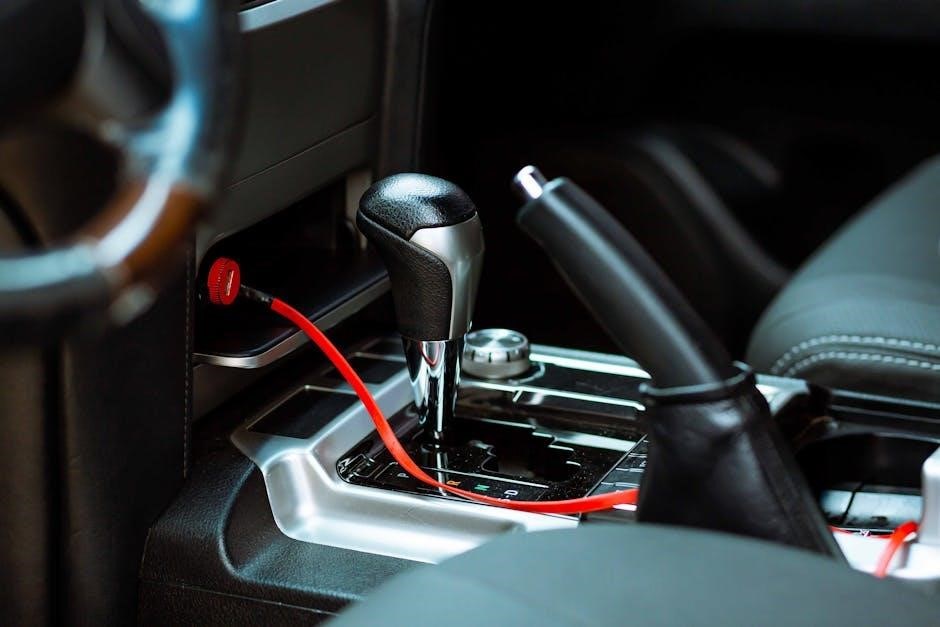
Replacing a clutch cable is another potential DIY task, though demanding. Internal gearbox repairs, like synchronizer replacement, are best left to professionals due to the complexity and precision needed.
Always prioritize safety and consult detailed repair guides before attempting any work. Incorrect repairs can cause further damage or unsafe driving conditions. Remember that a recall might exist for your vehicle, potentially voiding DIY attempts.
Professional Repair Shop Services
When facing a stuck manual gearbox, a qualified repair shop offers comprehensive diagnostic and repair services. Experienced technicians can accurately pinpoint the issue – whether it’s clutch problems, shift linkage, or internal gearbox damage.
Services include clutch replacement, hydraulic system repairs, shift linkage adjustments, and complete gearbox overhauls. They possess specialized tools and knowledge to address complex issues like worn synchronizers or damaged gear teeth.
Importantly, shops can verify if your vehicle is subject to any relevant recalls, like the 2017 recall for similar issues. Professional repair ensures safety and restores proper gearbox function, offering peace of mind and preventing further complications.
Gearbox Replacement Considerations
If extensive internal damage is found, or repair costs approach the price of a replacement, a gearbox replacement becomes a viable option. Consider both new and remanufactured units; remanufactured gearboxes offer cost savings while providing a reliable solution.
Factor in labor costs – gearbox replacement is a complex procedure requiring skilled technicians. Ensure the shop provides a warranty on both the gearbox and the labor performed.
Before proceeding, confirm compatibility with your vehicle’s make and model. A professional assessment will determine if additional components, like the clutch or flywheel, need replacement concurrently, maximizing long-term reliability and avoiding future issues.
Preventative Maintenance
Proactive maintenance significantly reduces the risk of a stuck manual gearbox. Regular transmission fluid changes are paramount, ensuring optimal lubrication and preventing wear on internal components. Follow the manufacturer’s recommended service intervals for fluid replacement, typically every 30,000 to 60,000 miles.
Adopt proper clutch usage techniques – avoid “riding” the clutch, which generates excessive heat and accelerates wear. Smooth and deliberate gear changes minimize stress on synchronizers and gear teeth.
Periodically inspect the shift linkage for looseness or damage, addressing any issues promptly. Paying attention to these details can extend the life of your gearbox and prevent costly repairs down the road.
Regular Transmission Fluid Changes
Maintaining optimal transmission fluid levels and condition is critical for preventing a stuck manual gearbox. Fluid lubricates gears and synchronizers, reducing friction and wear. Over time, fluid degrades, losing its lubricating properties and accumulating debris.
Follow your vehicle’s manufacturer’s recommendations for fluid change intervals – typically between 30,000 and 60,000 miles, but can vary. Use the correct type of fluid specified for your gearbox; using the wrong fluid can cause damage.
Inspect the fluid regularly for color and consistency; dark, gritty fluid indicates it’s time for a change. Consistent fluid maintenance is a simple yet effective way to prolong gearbox life.
Proper Clutch Usage Techniques
Employing correct clutch operation significantly impacts gearbox health and reduces the risk of getting stuck in gear. Avoid “riding” the clutch, which involves partially depressing the pedal during driving, causing excessive wear. Fully depress the clutch pedal when shifting gears to disengage the engine from the transmission completely.
Release the clutch smoothly and progressively to prevent jarring and strain on the gearbox components. Avoid abrupt or aggressive shifting, as this can damage synchronizers. Proper technique minimizes wear on the clutch disc and throw-out bearing, contributing to a smoother, more reliable shifting experience.
Gentle clutch control is key to preventing issues and ensuring longevity.